
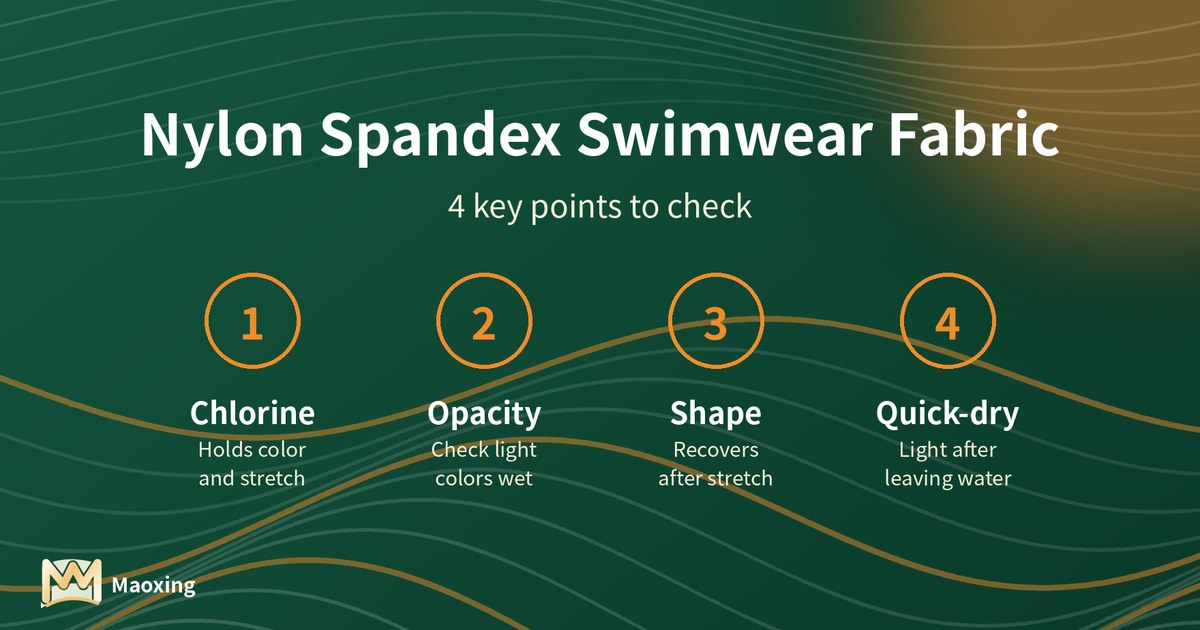
Quick answer: Choosing nylon spandex swimwear fabric starts with where the suit will be worn. Pool and training styles need chlorine-resistant spandex; beach and resort styles have to cope with saltwater, strong sun and sunscreen. Next, check how the fabric performs in water: whether it turns sheer when wet, holds its shape after a swim and dries quickly. Nylon spandex offers a smooth hand, strong stretch and a secure fit, which is why it's such a common swimwear choice. Pair it with the right lining and colors for each style.
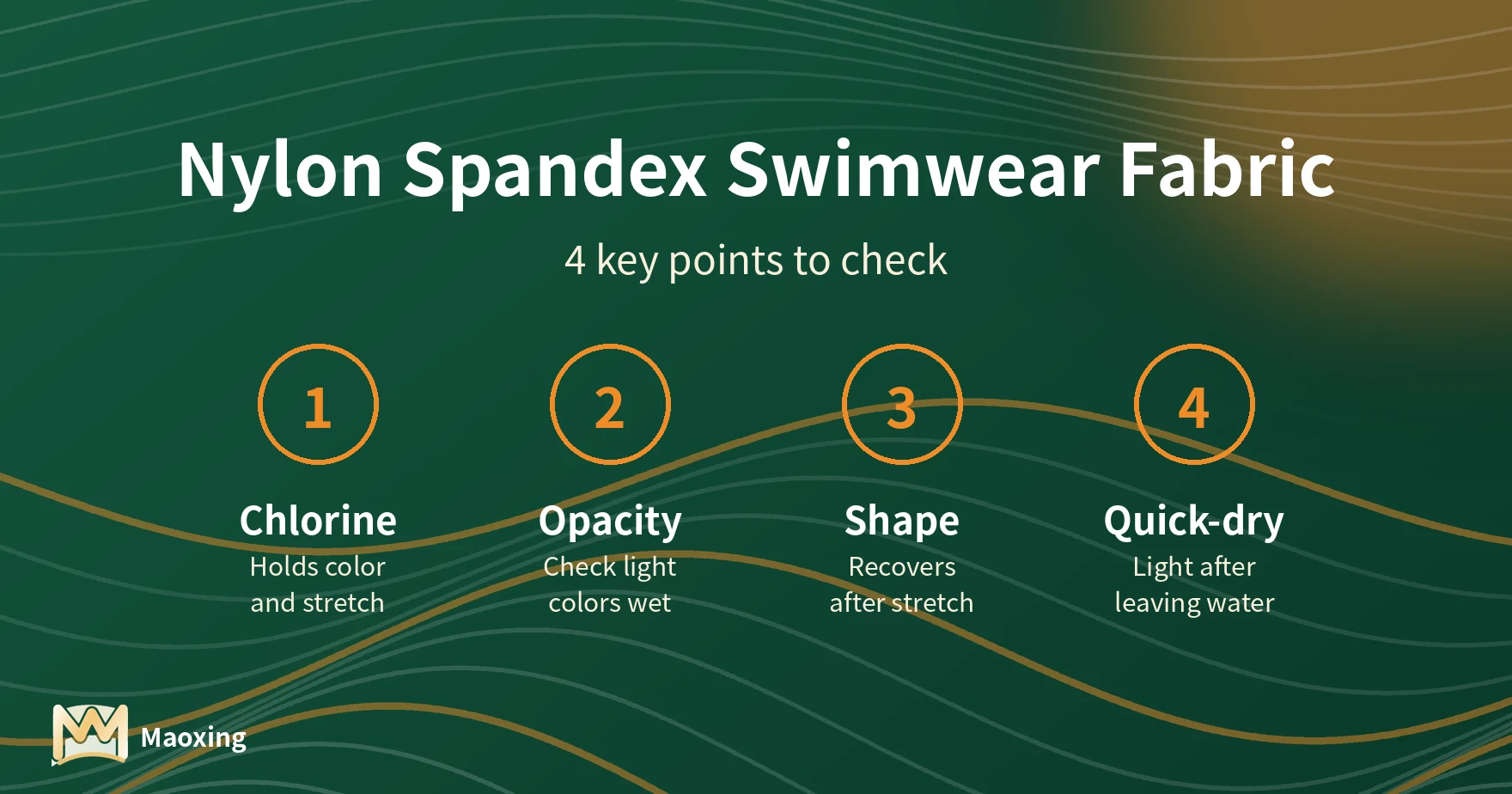
How Is Swimwear Fabric Different From Other Stretch Fabrics?
Swimwear spends hours in water and is exposed to chlorine, salt, sunlight and sunscreen. A nylon spandex that works for a base layer won't necessarily work for a swimsuit. Swim fabrics generally need a tight knit, shape retention in water, opacity when wet, and color and stretch that stay stable after repeated soaking and rinsing.
Why Does Chlorine Resistance Matter for Pool Swimwear?
Pool water is typically treated with chlorine, and regular spandex degrades with prolonged exposure: the fabric thins, sags, loses stretch and may start to look sheer or bubbly. Chlorine-resistant spandex was developed for exactly this and is commonly used in training suits and other high-frequency pool styles. Tell your supplier how the garment will be used and ask for relevant test reports rather than relying on verbal claims.
What Should You Watch for in Beach and Resort Swimwear?
Seawater, strong sun and the oils in sunscreen all affect color and stretch. Resort styles usually prioritize vivid colors and prints, so pay attention to colorfastness to light and seawater, and check whether sunscreen tends to leave marks on light shades. Rinsing in fresh water after wear and drying out of direct sun are standard care tips worth putting on the care label.
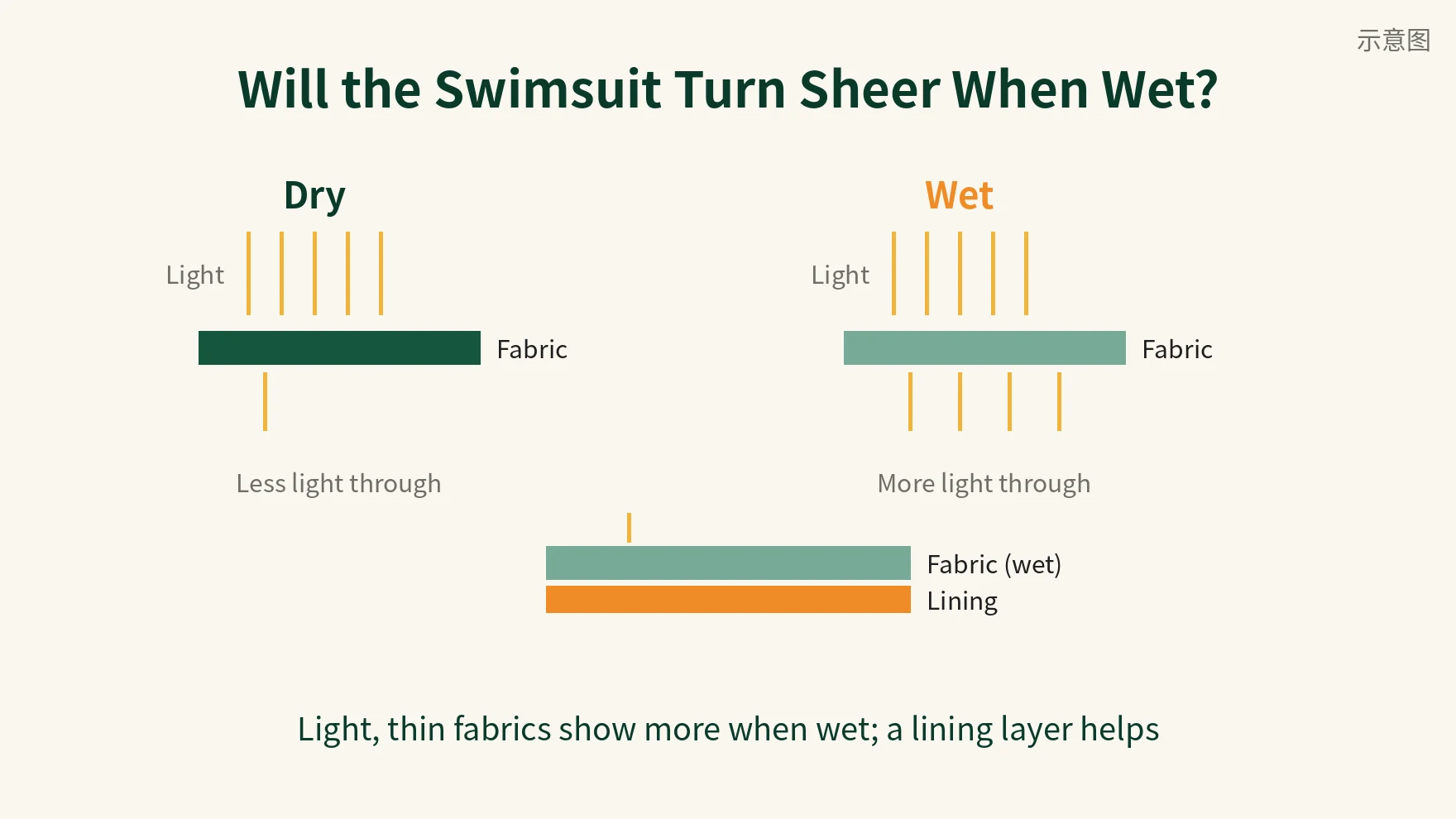
Will the Swimsuit Turn Sheer When Wet?
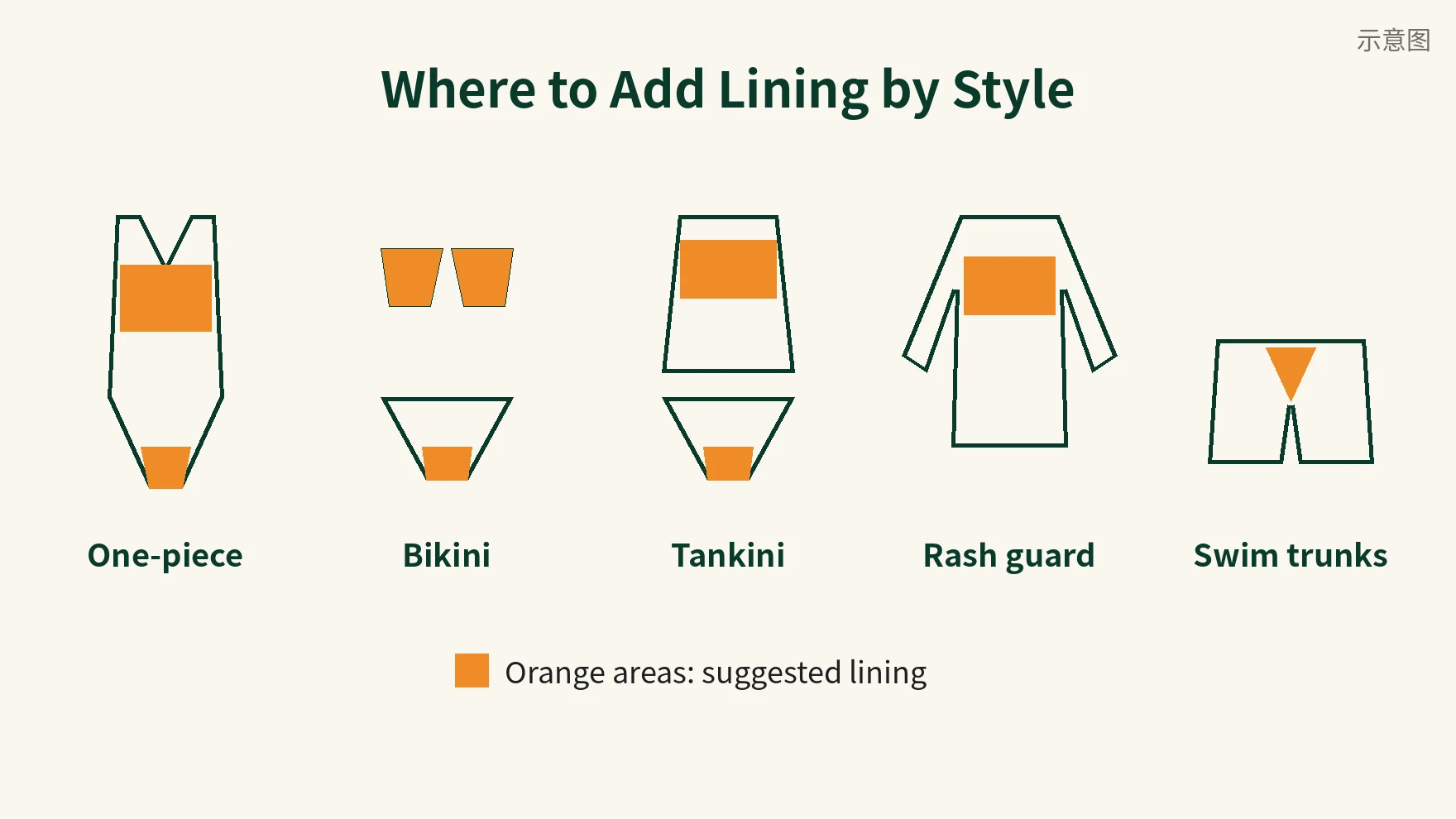
Most fabrics become more see-through when wet, especially light and bright colors. Three common fixes: choose a denser knit, add lining to the front and gusset, or use darker shades and prints. Always check samples wet, not just dry.
Why Do Swimsuits Sag in the Water?
Water constantly pulls on a swimsuit. If the fabric's recovery is weak, the bust and seat start to sag or the neckline loses shape. Swimwear typically uses nylon spandex with a firm hold and good recovery, and stable warp knits are a common choice. Shaping styles such as one-pieces and high-waisted bottoms can add stronger lining or power mesh.
Does Swimwear Fabric Need to Dry Quickly?
Cold, wet fabric clinging to the body after a swim isn't comfortable. Quick drying matters most for surf wear, swim cover-ups and kids' swimwear, which are worn for long periods out of the water. It depends on yarn and finishing; compare air-drying times during sampling and rely on supplier reports before placing bulk orders.
How Should You Approach Prints and Color?
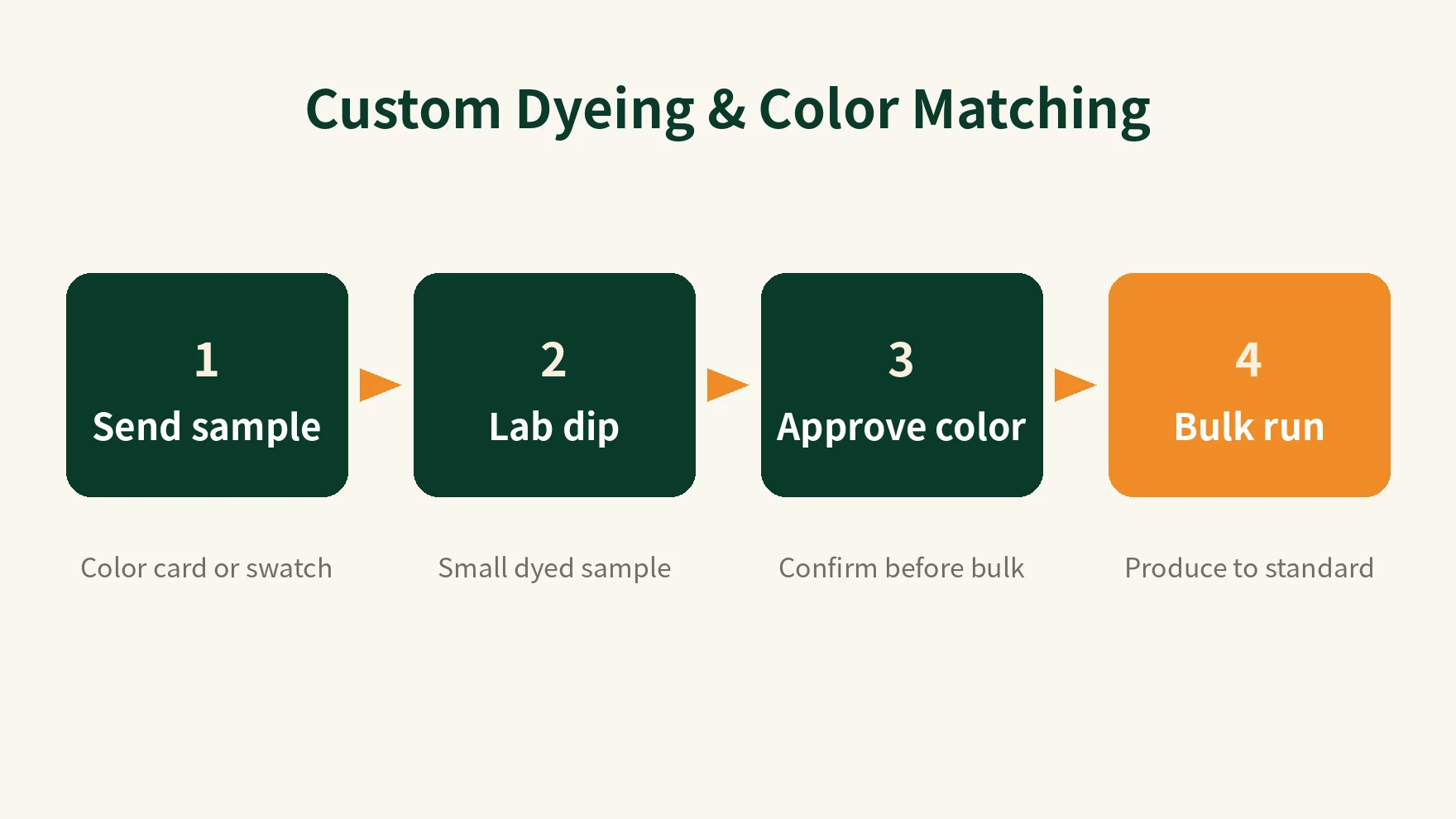
Nylon spandex dyes to rich, glossy colors, so solid suits and color-blocking are popular. For all-over prints, confirm early which printing methods suit nylon spandex and what the result will look like, since hand feel and color vary by process. If you need brand or collection colors reproduced consistently, work with a mill that offers custom dyeing to color and agree on a color-matching standard.
Which Fabric Suits Which Swimwear Style?
| Style | Typical Use | Fabric Priorities | Pairing Tips |
|---|---|---|---|
| Training / competition suits | Frequent pool use | Chlorine resistance, shape retention, low drag | Use chlorine-resistant spandex |
| Resort bikinis | Beach and pool | Color and print, hand feel, opacity when wet | Line the front and gusset |
| Shaping one-pieces | Vacation, casual pool | Hold, shaping, recovery | Add power mesh lining |
| Sun-protective swim / surf wear | Outdoors, beach | Coverage, quick dry, sun durability | Long sleeves or full-body cuts |
| Kids' swimwear | Pool and beach | Soft hand, quick dry, easy on and off | Moderate stretch, not too tight |
How Should You Sample Swimwear Fabric?
- Define the use case: pool or beach, training or vacation. It decides whether you need chlorine-resistant spandex.
- Wear-test wet: get the sample in the water, then check sheerness, sagging and fit, especially at the bust, seat and gusset.
- Simulate care: soak, rinse and dry several times, then look at color, stretch and size changes.
- Sample the lining too: shell and lining should match in color and stretch so one side doesn't pull against the other.
Maoxing is a source knit-and-dye mill that produces, dyes and sells its own fabrics, with 300+ weaving machines, a smart dye house and 160 tons of finished fabric output daily. Alongside core nylon/spandex knits, it makes quick-dry, waterproof and breathable functional fabrics and offers custom dyeing to color, which helps swimwear brands keep collection colors consistent.
FAQ
1. Is nylon spandex good for swimwear?
Yes. Its smooth hand, stretch and secure fit make it a common swimwear fabric. For frequent pool use, choose chlorine-resistant spandex.
2. Can swimwear be made from polyester spandex?
Yes. Polyester spandex is also widely used, especially for all-over prints, while nylon spandex tends to win on hand feel and next-to-skin comfort. Choose based on your positioning.
3. How do I stop light-colored swimwear from turning sheer?
Use a denser fabric, add lining and approve samples in the wet state.
4. How should swimwear be cared for?
Rinse in fresh water soon after wear, and avoid long sun exposure, tumble drying and wringing.
Contact Maoxing
- Showroom: Stall 16-18, North 5th Street, Zhongda Jiangnan Textile City, Haizhu District, Guangzhou
- WhatsApp: +86 15918964057