
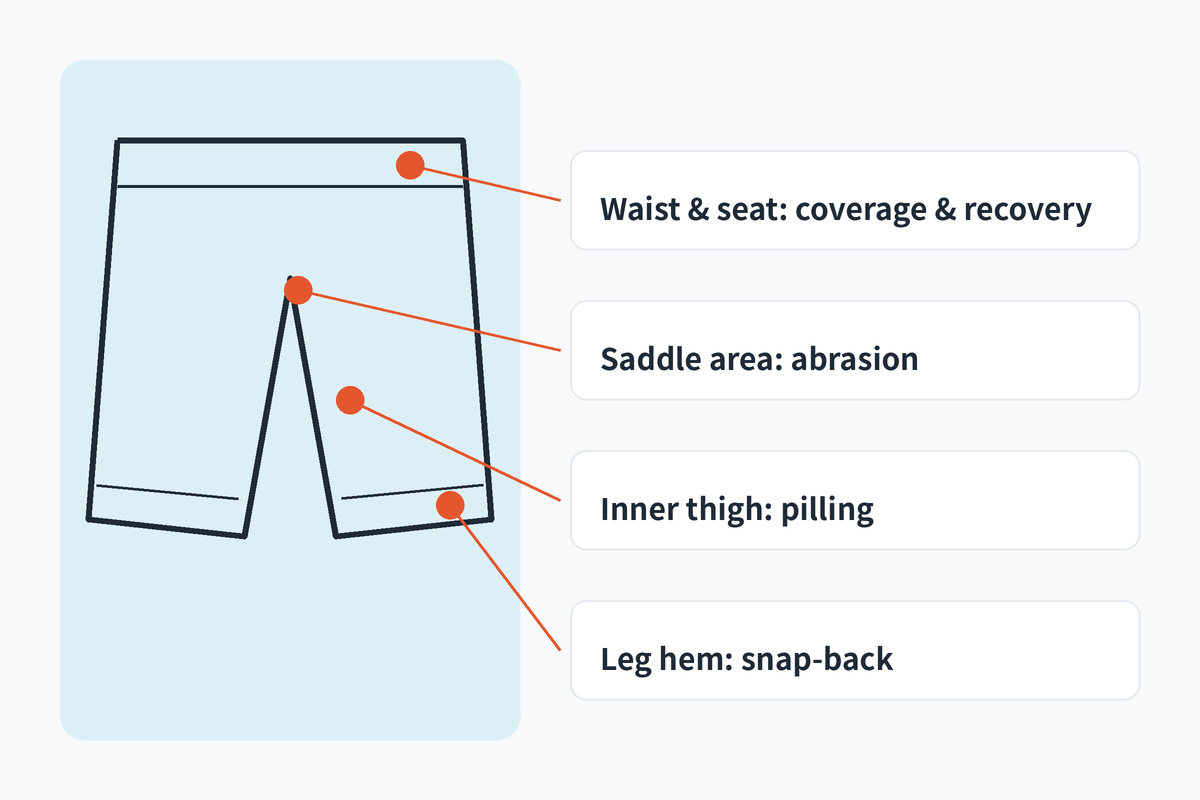
Short answer: Nylon spandex (nylon + elastane) suits cycling shorts because nylon has good abrasion resistance with good elastic recovery, while spandex gives body coverage. (Fiber properties per China Cotton Textile Association educational notes.) Check the fabric by zone: abrasion and pilling at the saddle area and inner thigh, coverage and recovery at the waist and seat, and snap-back at the leg hem. Also accept its weak points: limited heat and light resistance, and easy deformation under small forces.
Why do cycling shorts use nylon spandex fabric?
Nylon spandex fits cycling shorts because the garment depends on abrasion resistance and recovery, which are nylon's strong points. Educational notes from the China Cotton Textile Association say nylon (polyamide fiber) has high strength, good abrasion resistance, and good elasticity and recovery. Pedaling bends the legs over and over while the seat rubs the saddle, so the fabric must stretch repeatedly and return to the body.
The same source notes that nylon absorbs moisture relatively well among synthetic fibers and feels a little more comfortable than polyester, which matters on long, sweaty rides.
Saddle area and inner thigh: how do you check abrasion and pilling?
The saddle area and inner thigh take most of the wear in cycling shorts, so check these zones first. Nylon fiber resists abrasion, but whether a finished fabric fuzzes or pills also depends on yarn, knit structure and finishing.
- Pilling grade: GB/T 4802.1-2008 (circular locus method) rates pilling from grade 1 to 5: 5 no change, 4 slight, 3 moderate in some areas, 2 distinct over most of the area, 1 severe over the whole piece. A higher grade means better pilling resistance.
- Ask for the report: ask whether the fabric was tested to GB/T 4802.1 and which grade it got. If not tested, record "not tested" instead of guessing.
- Quick swatch rub: rub two swatches together and look for fuzz or shine. This is only a screen; the lab result decides.
Waist and seat: how do you judge coverage and recovery?
At the waist and seat, judge coverage and recovery by how fast the fabric snaps back and whether it leaves marks. Spandex supplies the stretch and nylon recovers well. Confirm spandex content and weight with the supplier for each fabric; this article gives no universal numbers.
- Stretch the swatch crosswise and release; it should lie flat again quickly.
- Stretch several times and look for bagging, thinning or whitening.
- Wrap it over a bent knee for a while and check for a bulge.
Leg hem and waistband: how do you prevent bagging out?
Leg hems and waistbands loosen easily, so plan for nylon's tendency to deform under small forces and control it with wear tests. Educational notes from the China Cotton Textile Association say nylon deforms and creases easily under small forces. Wear and wash the hem and waistband of a sample several times before approving bulk.
What are the weak points of nylon spandex cycling shorts?
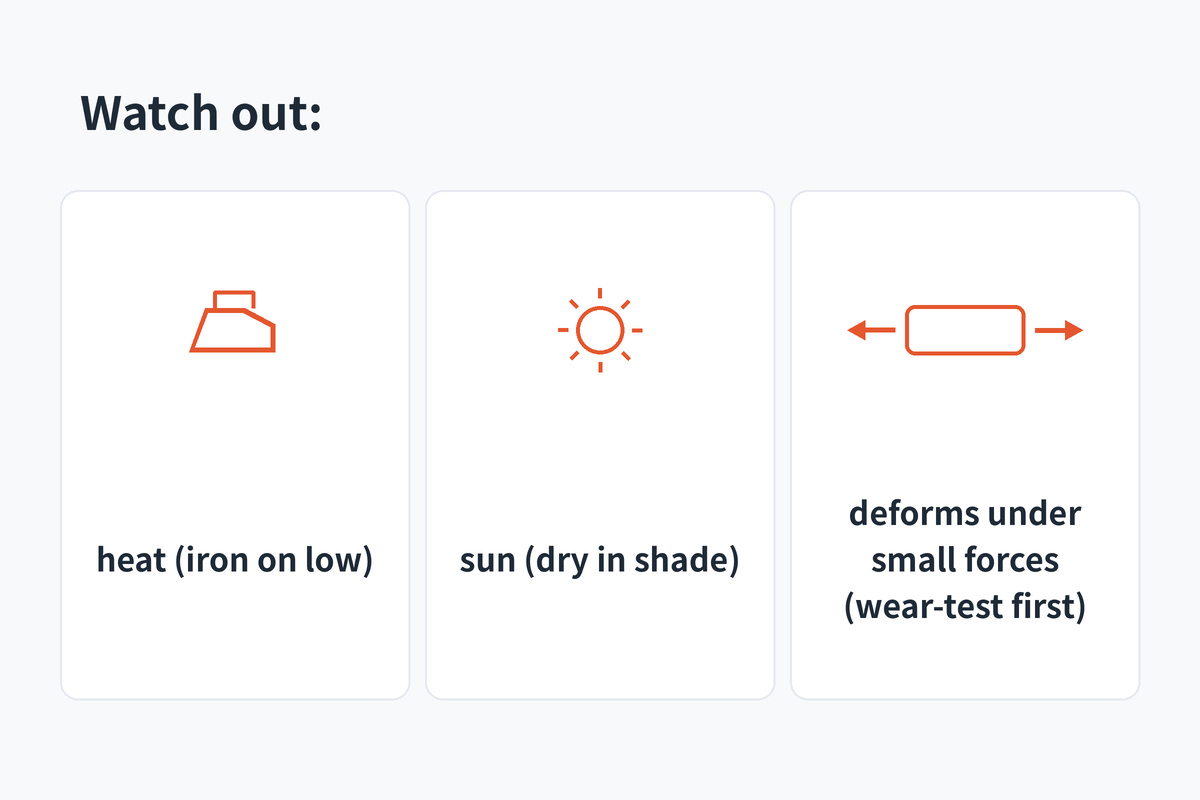
The weak points are heat, sunlight and deformation under small forces. Nylon's heat and light resistance are limited (China Cotton Textile Association educational notes); iron on low heat and confirm the exact temperature on each fabric's care label. Light colors need care in long sun exposure; care labels should say dry in shade and avoid hot tumble drying. The smooth surface can also snag on frame edges or hook-and-loop tape.
Further reading: How to care for nylon spandex fabric
How does nylon spandex compare with other options?
For cycling shorts, nylon spandex leads on abrasion and recovery and trails on heat and light resistance. The table uses only sourced qualitative points.
| Check | Nylon spandex | Polyester-based fabric | Cotton-based fabric |
|---|---|---|---|
| Abrasion | Good abrasion resistance | Test the specific fabric | Test the specific fabric |
| Recovery | Good elasticity and recovery | Test the specific fabric | Not suited to tight cycling shorts |
| Moisture and comfort | Relatively good for a synthetic; a little more comfortable than polyester | Slightly behind nylon | — |
| Main weak points | Limited heat and light resistance; deforms under small forces | Test the specific fabric | — |
| Pilling rating | GB/T 4802.1 grade | Same | Same |
How do you check cycling shorts fabric at Guangzhou Zhongda?
At Guangzhou Zhongda, use five steps: ask composition, stretch, rub, request reports, then wear-test a sample. At Maoxing Textile Dyeing we have worked with nylon spandex fabric at Guangzhou Zhongda for 15 years, and abrasion is usually the first thing people making cycling shorts want to know about.
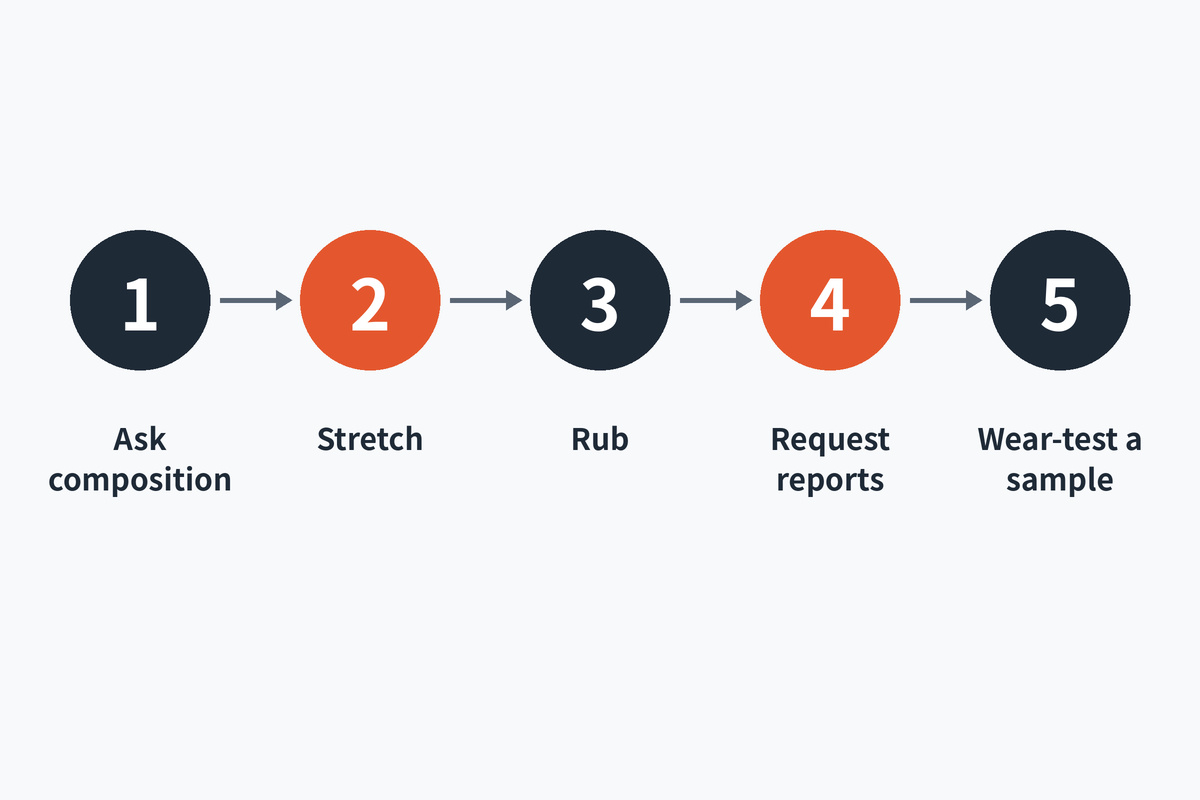
- State the use (road cycling or commuter shorts) and ask the nylon/spandex composition.
- Stretch both directions and check recovery and marks.
- Rub swatches for fuzz and shine.
- Ask for the GB/T 4802.1 pilling grade; record "not tested" if none.
- Make a test pair, ride and wash it several times, then decide on bulk.
FAQ
Do cycling shorts have to be nylon spandex?
No. Nylon spandex is a common choice when abrasion and recovery come first. Compare options with pilling tests and wear trials.
Will nylon spandex cycling shorts pill?
They can; it depends on the specific fabric. Ask for a GB/T 4802.1-2008 grade; higher is better.
Can nylon spandex shorts be tumble dried or ironed?
Best avoided. Nylon's heat resistance is limited; if ironing, use low heat and confirm the temperature on the care label.
What should I watch with light-colored shorts?
Sun exposure. Nylon's light resistance is limited, so label for shade drying or consider darker colors.
Contact
Maoxing Textile Dyeing is a source dyeing and knitting factory specializing in nylon spandex stretch fabric. Showroom: Stall 16-18, North 5th Street, Zhongda Jiangnan Textile City, Haizhu District, Guangzhou. WhatsApp: +86 15918964057.