
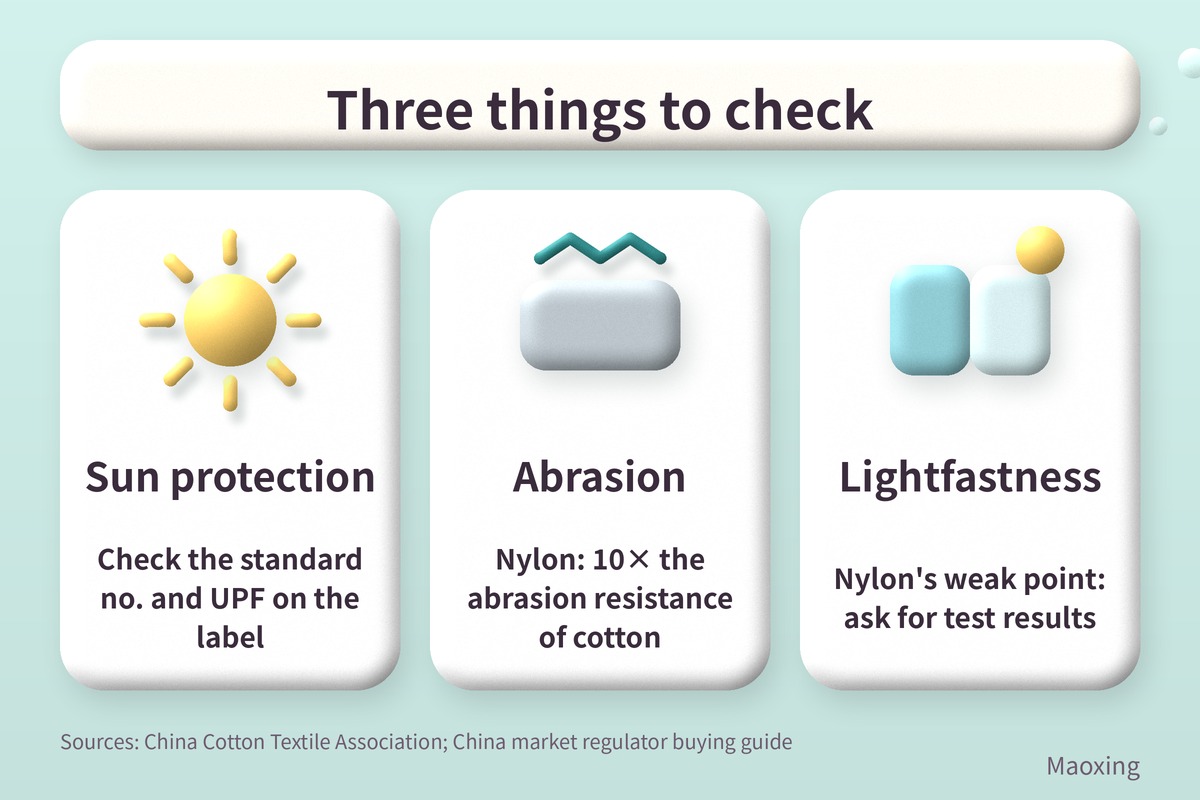
Quick answer: Fishing shirt fabric should be judged on three things: sun protection, abrasion resistance and lightfastness. For sun protection, read the garment label: under China's GB/T 18830-2009, a textile qualifies as UV-protective only when UPF > 40 and UVA transmittance < 5%. Nylon is strong on abrasion, at 10 times the abrasion resistance of cotton, but its light resistance is limited, so ask for lightfastness results before choosing fabric for all-day sun.
Why do fishing shirts need sun protection, abrasion resistance and lightfastness?
Fishing shirt fabric faces sun, rubbing and repeated washing all at once, because anglers stay out for hours. Shore, boat and lure anglers spend long stretches by the water, with sun overhead and glare off the surface. Cuffs and elbows rub against rocks, tackle boxes and rods, and the shirt gets washed often to remove sweat and fish smell. Sun protection decides how much UV gets through, abrasion resistance decides how long the shirt lasts, and lightfastness decides whether it yellows, fades or stiffens after long sun.
How should you check sun protection on a fishing shirt?
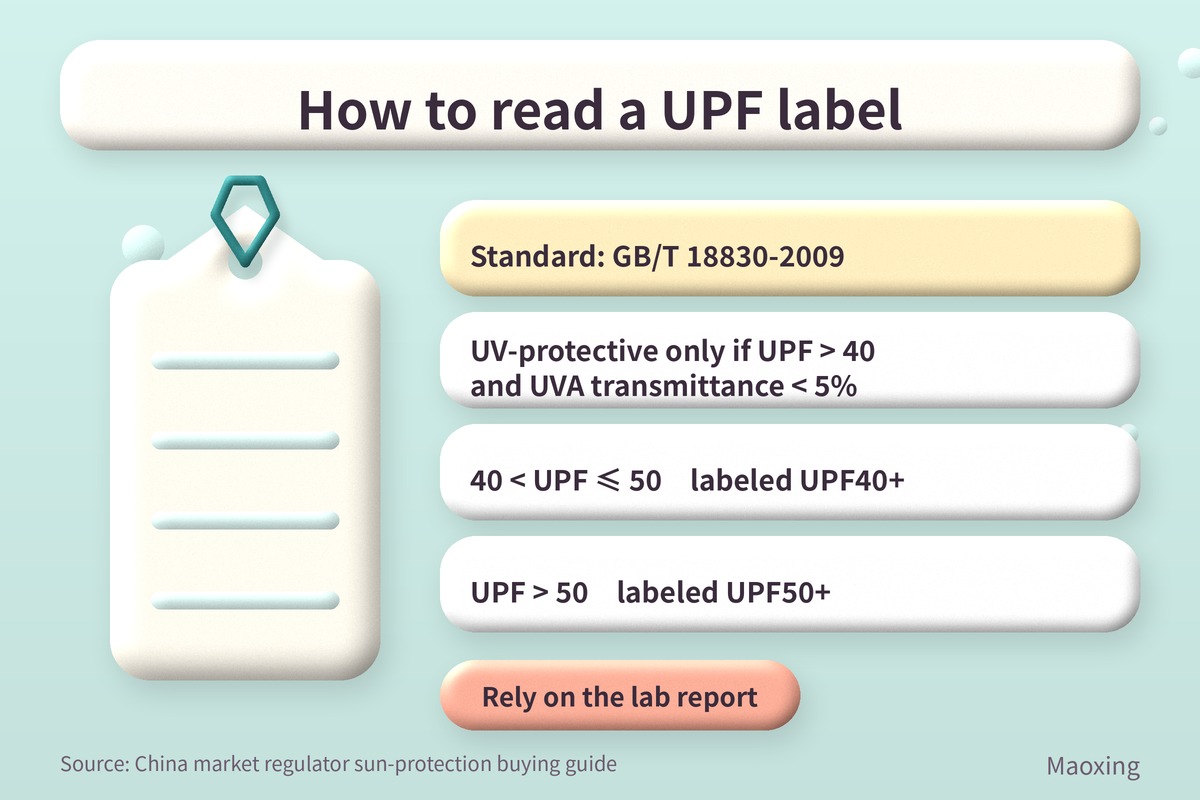
Check the label for a standard number and a UPF value rather than marketing words. A buying guide from China's market regulator (republished by the Shanghai Medical Products Administration) says that under GB/T 18830-2009, Textiles – Evaluation for solar UV protective properties, a product can be called UV-protective only when UPF > 40 and long-wave UV (UVA) transmittance < 5%. Labels follow set rules: 40 < UPF ≤ 50 is marked "UPF40+", and UPF > 50 is marked "UPF50+".
A fishing shirt's UPF comes from testing the garment or fabric, so rely on the lab report. The same guide notes that denser fabric gives relatively better UV protection; holding a swatch up to the light is a quick first check, and visibly see-through fabric deserves extra caution, but the test result is what counts.
Related: How to choose sun protection fabric
Why does fishing shirt fabric need abrasion resistance?
Fishing shirt fabric needs abrasion resistance because cuffs, elbows, shoulders and legs take constant rubbing. Casting and reeling keep the arms moving, anglers sit on rocks and tackle boxes, and backpack straps press on the shoulders. Nylon (polyamide) has an edge here: the China Cotton Textile Association's textile knowledge page says nylon's abrasion resistance is 10 times that of cotton.
Abrasion resistance does not make a fishing shirt snag-proof. Nylon spandex has a smooth surface, and hooks, thorny plants or sharp rocks can still pull threads out of it.
Related: Why nylon spandex snags and pills
Nylon has limited light resistance: is it still good for fishing shirts?
Nylon works for fishing shirts if you plan around its limited light and heat resistance when sourcing and caring for the garment. The same China Cotton Textile Association source says nylon's heat resistance and light resistance are both limited, and it should be ironed below 140°C. A fishing shirt may sit in the sun all day, so light resistance matters more than it does for everyday clothing.
When sourcing nylon spandex for fishing shirts, ask the supplier whether lightfastness has been tested and see the report, rather than judging by hand feel and color alone. For care, dry the shirt in the shade instead of more hours in strong sun, and if ironing is needed keep it below 140°C; most nylon spandex fishing shirts hang smooth without ironing.
Related: How to check colorfastness on nylon elastane fabric Related: How to care for nylon spandex fabric
How do fabric priorities change by fishing style?
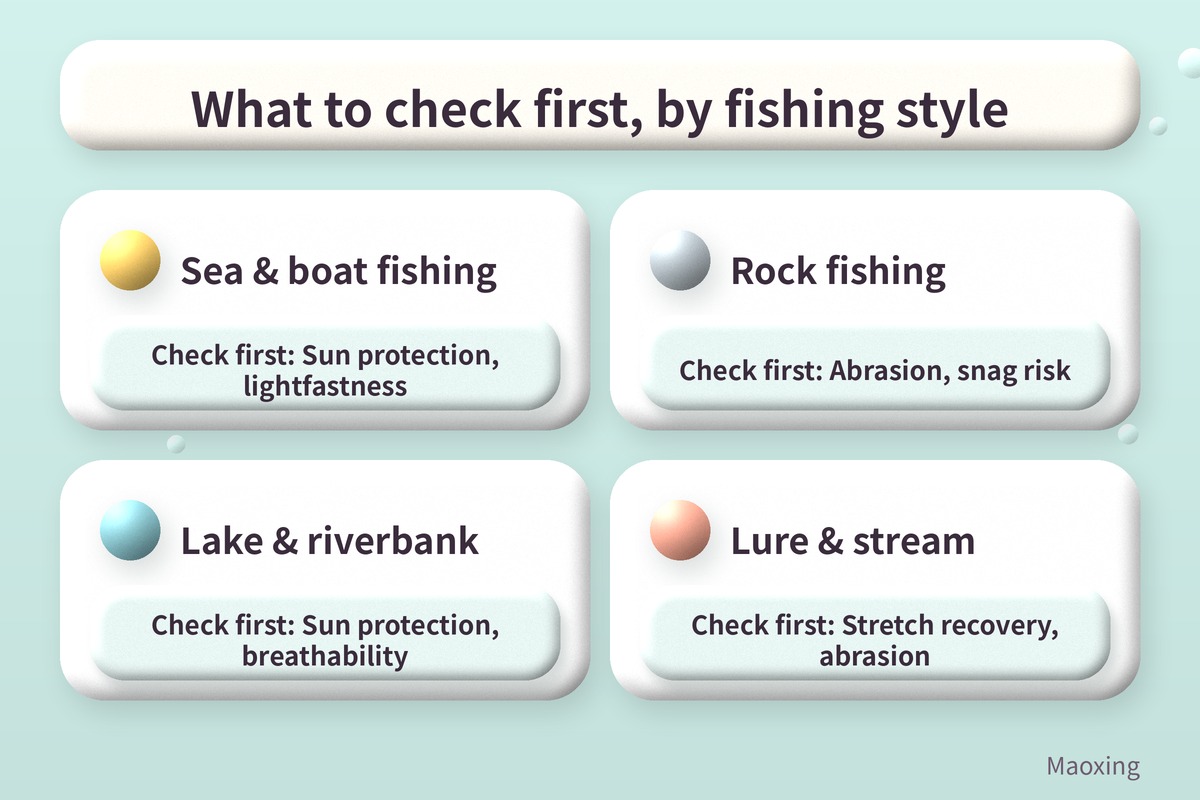
Fabric priorities follow the fishing style: long sun puts sun protection and lightfastness first, heavy rubbing puts abrasion first.
| Fishing style | Main stress | Check first | Ask at the swatch stage |
|---|---|---|---|
| Sea and boat fishing | Long sun, water glare | Sun protection, lightfastness | Garment UPF test and standard number on the label; lightfastness result |
| Rock fishing | Rock abrasion, snagging | Abrasion, snag risk | Is the surface smooth and tight; should cuffs and elbows be reinforced or paneled |
| Lake and riverbank fishing | Long sitting in sun, sweat | Sun protection, breathability | Fabric density and see-through; does it feel stuffy |
| Lure and stream fishing | Big movements, brush | Stretch recovery, abrasion | Does it recover after stretching; does the surface snag easily |
What should you look for when choosing nylon spandex for fishing shirts?
Choose nylon spandex (nylon elastane, polyamide elastane) for fishing shirts by using nylon's abrasion strength and asking about its light weakness up front. Nylon brings abrasion resistance and spandex brings stretch, so casting, squatting and turning feel less restricted. A simple swatch routine:
- Set the use case: sea, rock, lake or lure fishing decides whether sun protection, abrasion or stretch comes first.
- Check the surface: hold it to the light for density and feel whether it is smooth and tight.
- Ask for reports: UPF relies on a test report, lightfastness on a colorfastness test; don't accept verbal claims.
- Test it yourself: leave swatches in the sun for a few days and wash them a few times, then check color, hand feel and recovery.
At Maoxing Textile Dyeing, we have worked with nylon spandex at Zhongda, Guangzhou, for 15 years, and buyers making fishing shirts and sun-protection wear often ask whether a fabric can take the sun. Our advice: rely on the garment's lab report for UPF, check fabric density, lightfastness and recovery, and sun-test and wash your swatches before you decide.
Related: How to choose nylon spandex fabric at Zhongda Textile Market
FAQ
1. What does UPF50+ on a fishing shirt label mean?
UPF50+ means the tested UPF is above 50. Under GB/T 18830-2009, 40 < UPF ≤ 50 is labeled "UPF40+" and UPF > 50 is labeled "UPF50+"; also check that the label shows the standard number.
2. Is thicker fishing shirt fabric always better for sun protection?
No; density and test results matter more than thickness. Denser fabric gives relatively better UV protection, while thick but loose fabric may not, and the UPF test report is the final word.
3. Will a nylon fishing shirt yellow after long sun exposure?
It can, because nylon has limited light resistance. Check lightfastness when sourcing, and dry the shirt in the shade after washing.
4. Can I iron a fishing shirt on high heat?
No; nylon should be ironed below 140°C. Nylon spandex fishing shirts usually hang smooth; if you must iron, use a low setting and a press cloth.
Sources
- GB/T 18830-2009: UV-protective only when UPF > 40 and UVA transmittance < 5%; 40 < UPF ≤ 50 labeled "UPF40+", UPF > 50 labeled "UPF50+"; check the label for the standard number and UPF value; denser fabric gives relatively better UV protection. China market regulator sun-protection buying guide, republished by the Shanghai Medical Products Administration, https://yjj.sh.gov.cn/zjyw/20250522/2154d73163444ce792ed1cf680ed30bd.html , checked 2026-10-26 (Maoxing source library, this week, items 1, 2).
- Nylon abrasion resistance is 10 times that of cotton; limited heat and light resistance; iron below 140°C. China Cotton Textile Association, textile knowledge, http://www.ccta.org.cn/fszz/fzzsxx/rs/202104/t20210429_4136415.html , checked 2026-10-26 (Maoxing source library, this week, items 3, 5).
Maoxing Textile Dyeing | nylon spandex weft-knitted fabrics Stall 16-18, North 5th Street, Zhongda Jiangnan Textile City, Haizhu District, Guangzhou, China WhatsApp: +86 159 1896 4057 Email: zhangzengwen@mail.gzmaoxing.com Web: https://gzmaoxing.com/en/ Open daily 09:00-19:00; please message before visiting.